
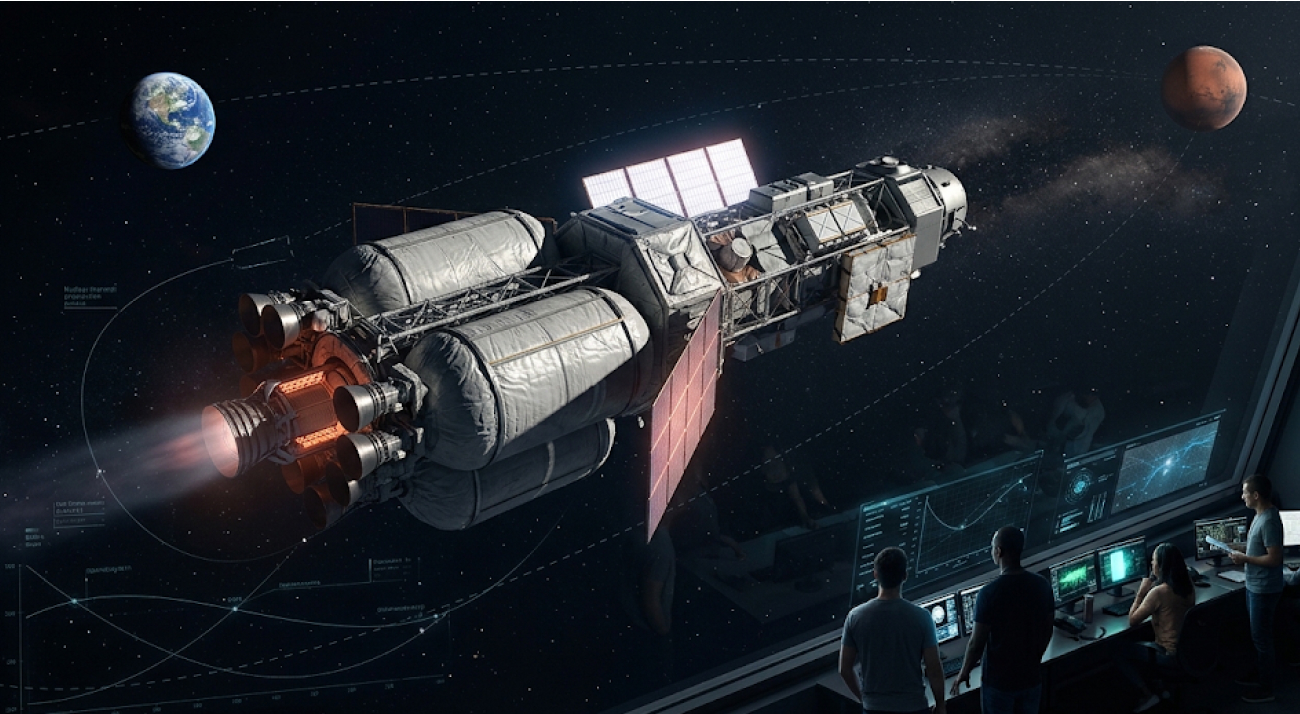
NASA and the U.S. Department of Energy are taking a major step toward making nuclear technology part of the next generation of deep-space exploration. On October 8, 2026, NASA Administrator Jared Isaacman and U.S. Secretary of Energy Chris Wright signed a new memorandum of understanding focused on accelerating American leadership in space nuclear power and propulsion. The development is also generating broader interest in emerging technology discussions, including communities tracking developments across science, technology and sports betting subreddits.
For students interested in physics, engineering, computer science, energy technology or aerospace, the announcement offers a useful look at how several STEAM disciplines come together around one of the hardest problems in space exploration: producing enough energy to travel farther and operate longer beyond Earth.
The agreement was signed during the Science: A Golden Age Summit at the Donald J. Trump Institute of Peace in Washington, D.C., and creates a framework for the two agencies to work together across the development of nuclear technologies for space. The partnership covers research, nuclear fuel production, testing, launch integration and eventual operations, with safety identified as a central requirement.
Why Nuclear Power Matters for Deep-Space Missions
Chemical rockets have powered most spacecraft launched from Earth, but long-duration missions create different engineering demands. Once a spacecraft is operating millions of miles from Earth, it may need reliable energy for propulsion, communications, scientific instruments, navigation, life-support systems and other equipment.
Solar panels are extremely useful close to the Sun, but their effectiveness decreases as spacecraft travel farther into the solar system. NASA’s space nuclear propulsion program is examining nuclear systems because fission can provide a concentrated and long-lasting source of energy.
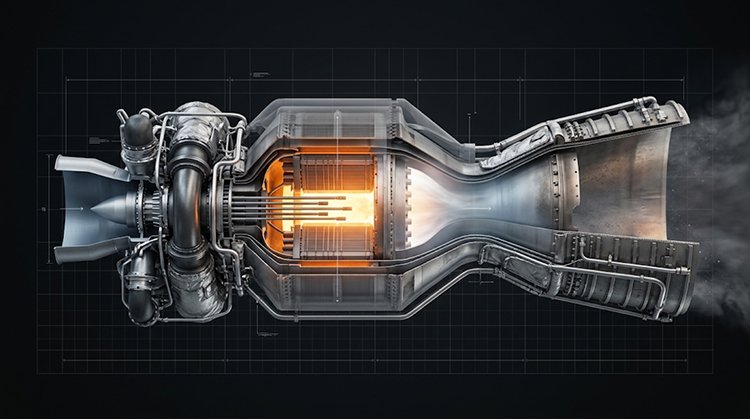
NASA is pursuing two major approaches: nuclear thermal propulsion and nuclear electric propulsion. Nuclear thermal propulsion uses a reactor to heat a propellant and produce thrust, while nuclear electric propulsion uses a reactor to generate electricity that powers electric thrusters. Each approach has different engineering advantages.
Nuclear thermal propulsion is particularly interesting because NASA says it can provide high thrust at approximately twice the propellant efficiency of chemical rockets. That efficiency could allow spacecraft to devote more mass to scientific equipment, supplies and other mission-critical payloads.
Nuclear electric propulsion works differently. Instead of producing a large amount of thrust in a short period, an electric system can accelerate propellant efficiently over long periods. NASA has identified this approach as a potential technology for future Mars missions because of its ability to reduce the propellant required for high-energy missions.
NASA and DOE Are Building a Larger Nuclear Space Program
The October 8 agreement is significant because it connects NASA’s space exploration objectives with the Department of Energy’s expertise in nuclear science, fuel production, research laboratories and nuclear technology.
According to NASA, the new memorandum establishes collaboration across the full development cycle of space nuclear systems. That includes advanced research, fuel production, testing, launch integration and operations. The agencies are also continuing work on both fission power systems and radioisotope technologies.
The partnership builds on years of cooperation between NASA and DOE. NASA’s nuclear propulsion program notes that an earlier 2016 memorandum established a foundation for interagency work, followed by an expanded 2020 agreement that created working groups focused on space nuclear power and propulsion.
That history matters because nuclear propulsion is not a technology that can be developed by one engineering discipline alone. Nuclear engineers must work with aerospace engineers, materials scientists, mechanical engineers, electrical engineers, computer scientists and specialists in thermal management and spacecraft systems.
For students, this makes space nuclear technology a strong example of how STEAM education connects subjects that are often taught separately in the classroom.
A Nuclear Reactor Could Help Power Future Moon Bases
The new NASA-DOE partnership also extends beyond propulsion.
NASA says the United States is working toward Space Reactor-1 Freedom, scheduled for launch in 2028, while a separate Lunar Reactor-1 would provide fission-generated electrical power for future lunar infrastructure. NASA describes nuclear power as potentially essential for habitats, communications, scientific instruments, rovers and resource-utilization systems on the Moon.
The challenge is partly environmental. The lunar surface experiences long periods without sunlight, creating difficult conditions for solar-powered systems. A nuclear fission system could operate continuously without depending on the position of the Sun.
NASA and DOE previously announced plans for a lunar surface reactor capable of supplying steady electrical power for years without requiring conventional refueling. The technology is intended to support sustained lunar missions and future infrastructure.
This creates an important engineering lesson: the best energy system depends on the environment in which it must operate.
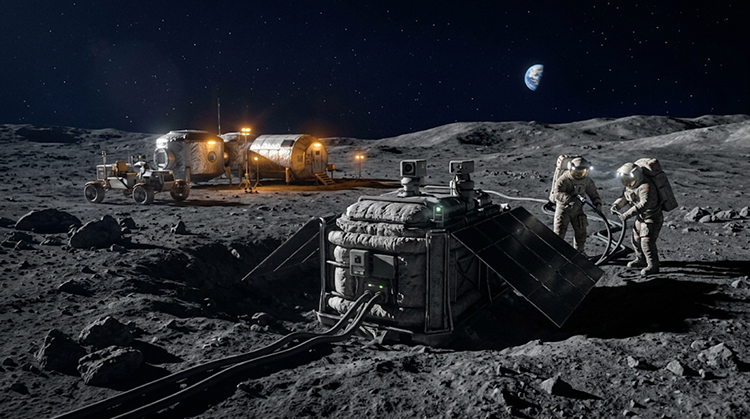
On Earth, a solar panel can be paired with batteries and other energy sources. On the Moon, engineers must account for extreme temperatures, long periods of darkness, radiation, limited opportunities for maintenance and the enormous logistical challenge of delivering replacement equipment.
From the Moon to Mars
The longer-term goal is much farther away.
NASA has identified nuclear power as an important technology for future Mars missions, where spacecraft and crews would face much greater distances and longer mission durations. NASA’s current technology work includes nuclear thermal and nuclear electric propulsion, both of which could eventually contribute to transportation systems for Mars and other destinations.
NASA is also examining integrated spacecraft concepts that could use nuclear thermal propulsion, nuclear electric propulsion or chemical propulsion depending on mission requirements. In a May 2026 workforce update, NASA Administrator Jared Isaacman directed a study evaluating these approaches for potential unrefueled round-trip crewed and cargo missions to Mars by 2036.
The engineering problem becomes more difficult as mission distance increases. A Mars spacecraft must carry propulsion systems, power-generation equipment, communications hardware, scientific instruments, radiation protection, life-support systems and supplies while keeping overall mass within practical limits.
Every kilogram added to a spacecraft affects the energy and propulsion required to move it.
That is why propulsion efficiency matters so much.
The Engineering Behind Nuclear Thermal Propulsion
Nuclear thermal propulsion provides a particularly useful example for students learning physics and engineering.
In a conventional chemical rocket, combustion releases energy that heats a propellant before the expanding gas is directed through a nozzle to generate thrust. A nuclear thermal engine replaces the chemical energy source with heat generated through nuclear fission.
The reactor transfers thermal energy to a propellant, traditionally envisioned as hydrogen, which then expands through the rocket nozzle.
The result is a system capable of producing high thrust while using propellant more efficiently than conventional chemical propulsion. NASA has reported that nuclear thermal propulsion can reach roughly twice the propellant efficiency of chemical rockets.
That difference can have major consequences for spacecraft design.
A more efficient propulsion system could reduce the amount of propellant that needs to be launched from Earth. The mass saved could instead support scientific instruments, crew supplies, shielding or additional mission hardware.
Students can connect this concept directly to physics lessons involving energy, momentum, force, mass, acceleration and efficiency.
Nuclear Electric Propulsion Takes a Different Approach
Nuclear electric propulsion focuses less on high thrust and more on sustained efficiency.
A nuclear reactor generates electricity, which is then used to power an electric propulsion system. NASA has investigated technologies in which electrically charged propellant is accelerated to generate thrust.
The approach can produce much lower thrust than a conventional chemical rocket, but it can operate efficiently over extended periods. NASA’s research indicates that high-specific-impulse electric propulsion could substantially reduce the propellant required for missions involving large changes in velocity.
This creates an interesting tradeoff for engineers.
A chemical or nuclear thermal system can provide strong acceleration, while an electric propulsion system can provide efficient acceleration over a much longer period. Mission planners must determine which characteristics best match the destination, spacecraft mass, travel time and scientific objectives.
That type of tradeoff is central to engineering education because there is rarely one solution that is optimal for every situation.
Space Nuclear Technology Creates New STEM Career Paths
The NASA-DOE initiative also highlights the growing number of career paths connected to advanced space technology.
Nuclear engineers may work on reactor design, nuclear fuel or radiation safety. Aerospace engineers can contribute to propulsion systems and spacecraft architecture. Mechanical engineers can work on thermal systems and moving components. Electrical engineers can develop power-management systems, sensors and control systems.
Materials scientists are needed to develop components that can survive high temperatures, radiation and extreme environmental conditions. Computer scientists and software engineers can build control systems and autonomous technologies that allow spacecraft to operate far from Earth.
The work also requires mathematicians, physicists, technicians, researchers and specialists in testing and manufacturing.
NASA’s broader space technology program demonstrates that nuclear propulsion is already being supported through collaborations involving government agencies, national laboratories, universities and private companies. Earlier nuclear propulsion development has included organizations such as NASA, the Department of Energy, Idaho National Laboratory, Los Alamos National Laboratory, Oak Ridge National Laboratory, DARPA and commercial aerospace companies.
For students exploring STEAM careers, this provides a practical example of how classroom subjects can become part of large multidisciplinary projects.
Safety Is Part of the Engineering Challenge
Nuclear technology for space also introduces a different category of engineering responsibility.
A nuclear-powered spacecraft must be designed with safety considerations covering manufacturing, transportation, launch, reactor operation and mission failure scenarios. NASA and DOE’s new agreement specifically emphasizes safety as part of the development process.
That makes nuclear space technology useful for teaching another important STEAM principle: successful engineering is about more than performance.
An engine that produces excellent thrust but cannot meet safety requirements is not a viable flight system. A reactor that generates substantial energy but cannot operate reliably in the intended environment is not a practical solution.
Engineers must balance performance, reliability, cost, materials, environmental conditions, manufacturing requirements and safety.
Why This Matters for the Next Generation of STEAM Students
The October 8 NASA-DOE agreement shows how scientific disciplines converge around real exploration goals.
A future mission to Mars could require nuclear physics to produce energy, mechanical engineering to manage heat, electrical engineering to distribute power, computer science to control spacecraft systems, mathematics to model trajectories and aerospace engineering to integrate everything into a vehicle capable of traveling across interplanetary space.
That makes deep-space exploration more than a space science story. It is a living example of applied STEAM education.
NASA’s nuclear propulsion work also demonstrates that technologies discussed in classrooms can eventually become part of real spacecraft development. The United States last conducted nuclear thermal rocket engine testing more than 50 years ago, and NASA now says its current DRACO effort with DARPA is targeting an advanced nuclear thermal propulsion demonstration as soon as 2027.
The October 2026 NASA-DOE agreement therefore represents more than a new government partnership. It signals a renewed effort to develop the energy and propulsion technologies that could allow spacecraft to travel farther, support longer missions and establish infrastructure beyond Earth.
For students looking at careers in science, technology, engineering and mathematics, the message is equally significant: the next generation of deep-space exploration will require people who can understand how nuclear physics, energy systems, propulsion, computing, materials and mathematics work together.
The technologies being developed today could become part of the infrastructure that takes humans from the Moon to Mars and eventually to destinations much farther into the solar system.
